

Background
The University of Pittsburgh’s Swanson School of Engineering has long been at the forefront of industry-driven innovation. The school first began conferring engineering degrees in the 1840s, at the height of the Industrial Revolution, when Pittsburgh was a hub for iron, glass, and textile manufacturing. As Pittsburgh transitioned to a steel- and coal-driven economy, the university conferred degrees in civil, mechanical, and mining engineering. And in 1910, the university introduced the first Department of Petroleum Engineering.
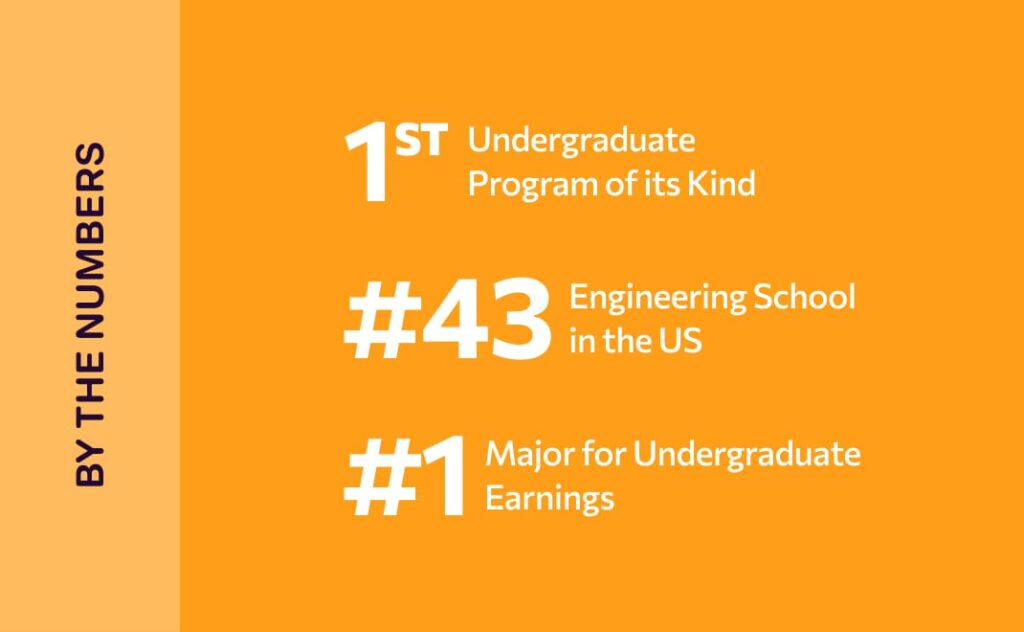
In 2025, Pitt announced it would be continuing on with this tradition of innovation by introducing a degree in Natural Gas, Renewables and Oil Engineering (GRO), a first-of-its-kind program designed to prepare energy engineers for the transition to renewables.
This exciting new program not only reflects the energy needs of the region and nation, but the interests and preferences of prospective engineering students, thanks to research Pitt conducted in partnership with Campos.
Execution
When Pitt first approached Campos about this study, they had industry data to support the demand for graduates of a program like this, and enthusiastic faculty members who believed Pitt was uniquely positioned to launch such a program. But they wanted to be sure prospective students would be interested in the program.
We partnered closely with faculty stakeholders to design and field a survey among prospective engineering students to explore their motivations for pursuing engineering and their openness to pursuing energy engineering in particular. We then explored interest in and reactions to Pitt’s potential program specifically, teasing out what about it was most appealing and what kinds of messages should be foregrounded most when marketing to prospective students. We also tested program names and collected open-ended responses that brought qualitative nuance to our findings.
Results
Campos delivered a report that detailed interest in the program, and then we went a step further by using secondary data sources and appropriate discount weighting to forecast student demand for the program as well as what the marketing reach would need to be to garner the desired number of prospective students. We worked closely with the Swanson School as it fine tuned the program and messaging to ensure it reflected prospective student preferences and priorities. The first students will begin their studies in the fall of 2026.